When the Trout Give Up, the Stripes Take Over: November Perch on Venachar
Photo: Rick Obst, CC BY 2.0, via Wikimedia Commons
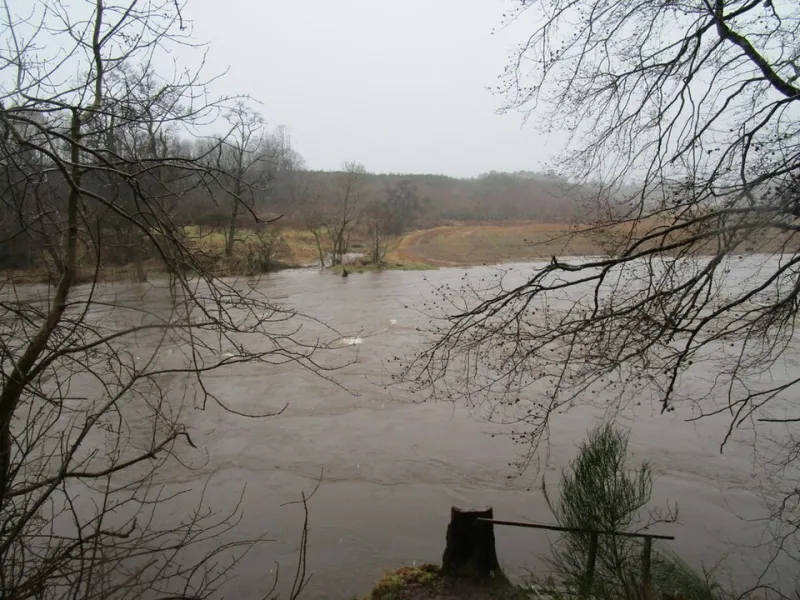
November has a way of emptying a loch. The trout crowd drifts away, boats get hauled up the slipway, and Loch Venachar settles into that flat grey mood that makes you question the alarm you set in the dark. But nobody told the perch. While the trout go moody and fussy, the stripes are shoaling up and feeding hard, because for them the next few weeks are the last proper sit-down meal before winter rations.
That is the shift in thinking worth making. Late autumn is not a write-off on the bank; it is perch season, and Venachar is as good a place as any in the Trossachs to go chasing them. All you need is a light rod, a handful of small jigs, and a bit of tolerance for drizzle.
Why the perch switch on when the trout switch off
Perch are opportunists. Through summer they are spread out, picking off whatever drifts past, and most of them are too small to bother targeting. As water temperatures slide towards single figures, bait fish bunch up and the perch follow, forming shoals that can hold everything from thumb-length tiddlers to genuine two-pound fish.
They are also far less precious than trout. No matching the hatch, no staring at a flat calm waiting for a rise. Perch hunt by sight and by their lateral line, so a bit of colour in the water or a lure that thumps gently on the drop does the job. Cold water slows them down, but it does not switch them off — you simply fish slower and closer to the bottom than you would in September.
Where to find them on Venachar
Venachar is long and narrow with a lot of bank that looks promising and is not, so it pays to be choosy rather than covering water.
- Drop-offs close to the bank. Perch sit on the edge of deeper water and slide up to feed. A slow countdown before you start the retrieve is worth more than an extra ten yards of casting.
- Collapsing weed edges. The beds are dying back through November, but the remaining green stuff still shelters small fish. Fish the edge rather than the middle.
- Rocky points and burn mouths. Anywhere a burn tips in, or a point pushes out into the loch, deserves a few casts.
- Structure along the road shore. Jetties, slipways and the odd mooring give perch something to sit beside.
As a rough rule, start in six to twelve feet and work deeper as the month wears on. Small fish tend to sit shallow; the better ones are usually a little further out and a little lower in the water.
Small jigs, fished slowly
The bread-and-butter approach is a two- to four-inch shad or paddle tail on a two- to five-gram jig head. Cast, let it touch down, then lift the rod tip a foot and let it fall on a semi-tight line. Most bites come on the drop, so watch the braid as much as you feel for the tap — a tiny tick or a line that stops falling early is often the only signal.
Colours that keep working in peaty, tea-stained water: chartreuse, motor oil, black-and-gold, and anything with a flash of orange. If the loch is carrying colour after rain, go brighter and slightly bigger. If it is clear and cold, downsize and slow down.
Dropshot for the fussy days
When the fish are there but not committing, a dropshot rig earns its keep. A five- to ten-gram weight, a size eight or ten hook, and a two-inch worm or small creature bait, twitched in place with long pauses. It is deadly on perch because the bait stays in the strike zone instead of sailing past on the retrieve, and it is the rig that rescues a session when the wind drops and the loch goes glassy.
Light tackle is the whole point
You do not need much. A five-to-fifteen-gram spinning rod, a 2000-size reel, eight-pound braid and a six- or eight-pound fluorocarbon leader will handle anything Venachar throws at you — and it makes a half-pound perch feel like a proper fish. That is the joy of it. The scrap is out of all proportion to the size of the fish, and a busy day on small lures beats a blank on big ones.
Take a small net, forceps and either a mat or permanently wet hands for unhooking. Perch have spiny dorsal fins and gill covers that will remind you to grip them properly across the back rather than squeezing.
Timing a November session
Forget dawn starts. In cold water the middle of the day is usually better — ten until three is the window I would pick. Overcast sky with a bit of ripple is ideal; flat calm and blue sky means you slow everything down and lean on the dropshot.
Check your permit before you travel, too. Venachar is not a free-for-all, and the bank rules are worth reading before you set off rather than after a knock on the shoulder.
The last hour
One thing to remember about perch: they are a native fish and the bigger females are the future of the shoal. Handle them properly, keep them wet, keep the photos quick, and put them back. A Venachar perch of a pound and a half is a lovely fish, and it took a lot longer to grow than it will to photograph.
Fish it right and November stops being the end of the season. It becomes the bit where the loch goes quiet, the crowds go home, and the fishing gets pleasantly busy.