Nothing on the Mat: What a Fishless Morning on Loch Ard Actually Taught Me
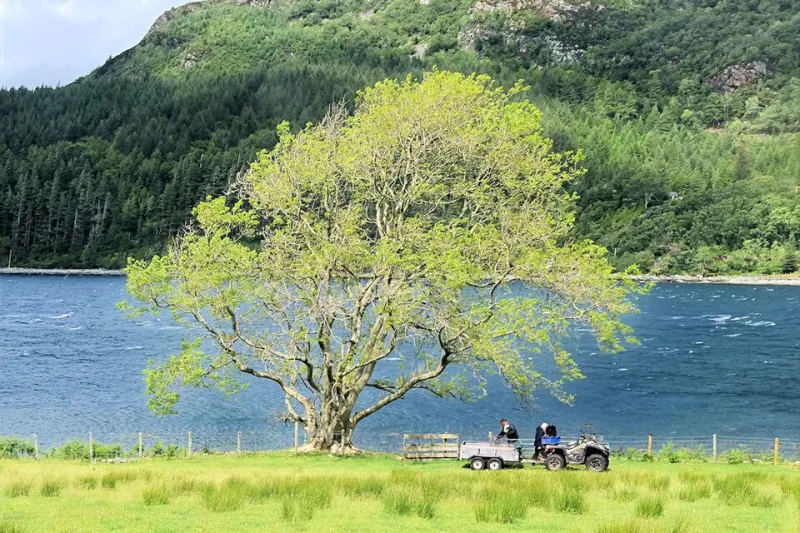
Photo: David Dixon , CC BY-SA 2.0, via Wikimedia Commons
The forecast said light winds, no rain and a hard overnight frost. Two of those three things were accurate, and the one I hadn't thought hard enough about was the one that decided the day.
This is a report of a blank. I'm not going to dress it up as a triumph of character-building. But it wasn't wasted either, and the lessons were specific enough to be worth writing down.
The plan that looked fine on paper
We aimed for Loch Ard because it's accessible, it holds pike, and the north shore near Kinlochard gives you a decent walk with a few options once you're out of the car. On paper: arrive, walk east for fifteen minutes, fish two deadbaits over a drop-off, move once if nothing happens, home by mid-afternoon.
What actually happened: we left later than intended, walked further than we needed, and fished a piece of bank chosen for the fact that it was flat, dry-ish and didn't involve a climb. That's a comfort decision dressed up as a fishing decision.
What the loch gave us instead
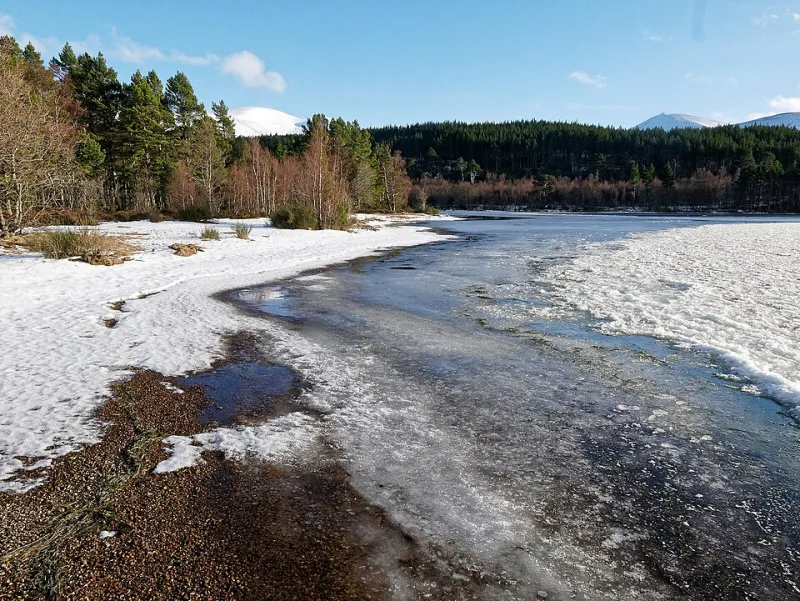
Nothing. Not a dropped run, not a twitch, not a sniff. The water was gin clear and mirror calm — beautiful in the way that only freezing mornings manage, with ice in the margins and the hills holding a hard grey light until well past nine.
We did get good company, a heron that clearly thought we were idiots, and a proper look at a stretch of shore I hadn't fished before. That last part matters more than it sounds.
Where it went wrong, in order of importance
Timing
We fished roughly nine until one. In a cold snap, the best window is usually the last of the dark and the first grey hour — and we spent it in the car and on the walk in. By the time the baits were out, the loch had that flat, switched-off look that comes with full daylight on very cold water.
Second timing error: we went on the fourth morning of a hard frost. Water temperature had been falling for days. A pike on day four of a freeze is a different animal from a pike on day one, and we'd have been better off waiting for the first mild, cloudy day after the snap broke.
Bank choice
No wind lane. No obvious drop-off within casting range of where I actually sat. No burn mouth, no point, no corner where a breeze was pushing baitfish. Just tidy, comfortable, featureless water — and about four metres of it under the ledger bait.
Winter pike don't ask for much, but they do like an edge. I chose the deckchair and forgot the edge.
Presentation
The ledger bait went out and sat in silt. For two hours. A bait sitting in soft bottom on a still, clear loch is not sending out much of a signal. What I should have done, at the forty-minute mark, was shorten the hooklink, lift the bait slightly, or switch the float rod to fish a bait just off the bottom where it could actually be seen.
Instead I did what most of us do on a cold day: I sat still, drank coffee and blamed the weather.
Reading the water
No baitfish topping. No bird interest. No colour change anywhere along the shore. Three things that would have told me to pick up and walk. I noticed all of them and fished on anyway, which is a different failure entirely — not ignorance, just stubbornness.
The one thing I'd keep
The notes. Water temperature around four degrees, air at minus two on arrival, no wind, steady pressure, zero fish. That's one line in a logbook, and it's already useful, because it's a line I can compare against the next visit rather than vaguely remembering that it was 'cold'.
The other keeper is the reconnaissance. I now know where the gate is, how long the walk takes with a rucksack, where the shore steepens, and roughly where the water deepens. That's worth a morning, even without a fish.
What a blank is actually worth
A blank isn't a disaster. It's rent. You pay for the information with a wasted morning, and if you don't write the information down, you've simply wasted the morning.
The people who catch consistently on these lochs in winter aren't lucky. They've usually paid this rent several times on the same piece of bank and learned which corner produces when the wind swings, and which one is a waste of a flask of tea.
The checklist I now run before a cold-water trip
- What has the air temperature done in the last 48 hours — falling, flat or rising?
- Is there any cloud or wind forecast, or is it clear and still?
- Which bank puts me within casting range of a feature, not just a comfortable car park?
- What time is first light, and can I be fishing thirty minutes before it?
- Have I got one bait up off the bottom and one on it, so I'm not guessing?
- What's my move time? Decide now — usually forty minutes without interest.
- Have I written down temperature, wind and result before I drive home?
Eight questions would have been overkill. Seven is enough to have turned a fishless morning into a slightly better-planned one — and the next visit on that shore starts with an advantage rather than a blank sheet.