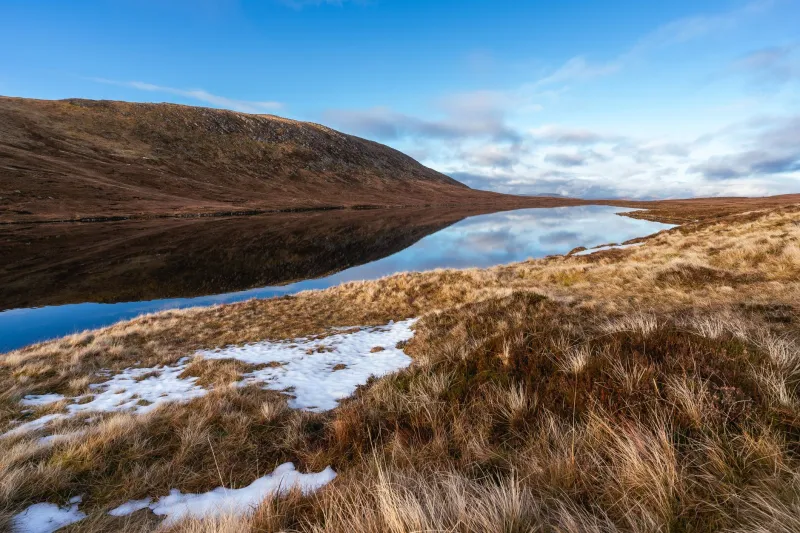
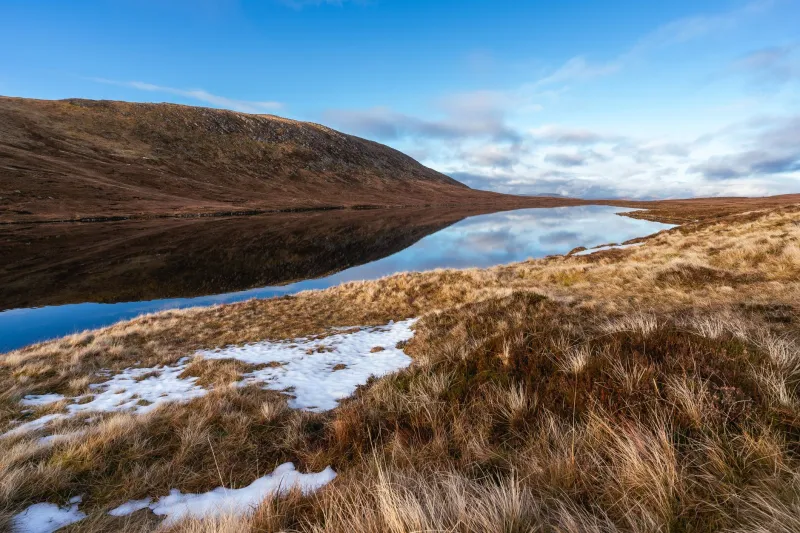
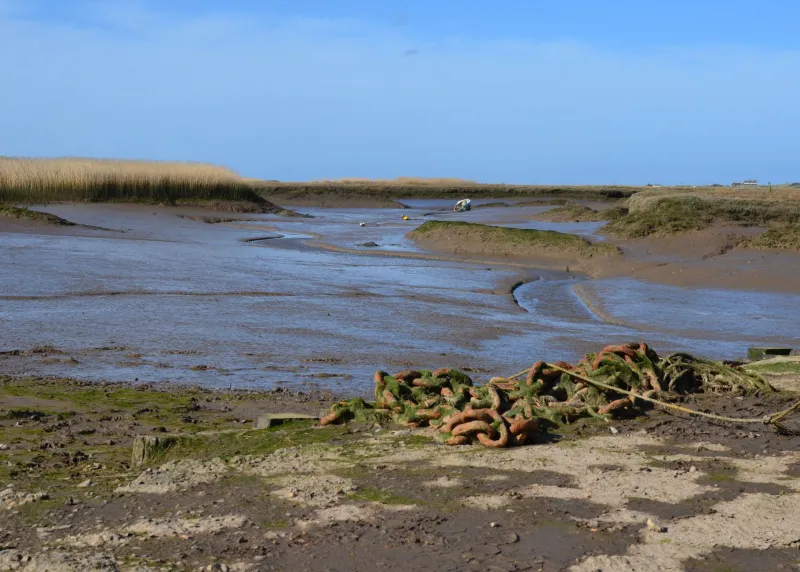
Gap Hunting: Picking a Two-Hour Winter Window on Trossachs Banks
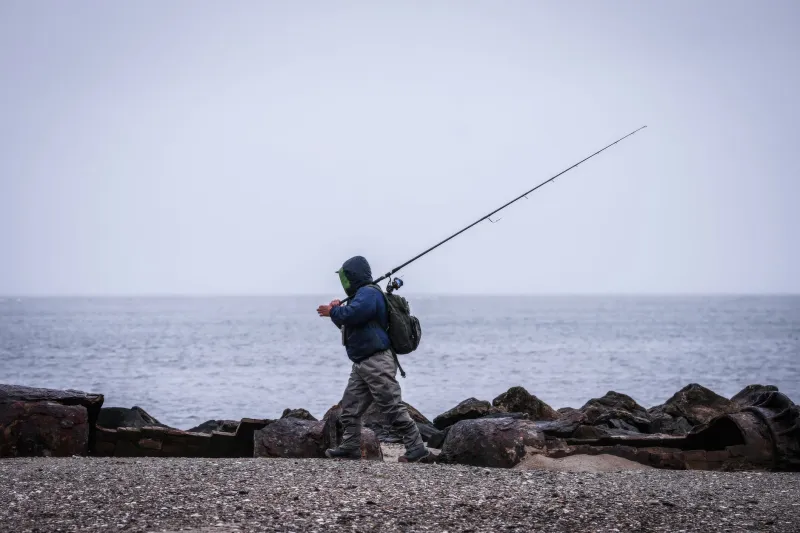
Winter fishing in the Trossachs is not really a day out. It is a short appointment with a gap in the weather, and the angler who treats it that way tends to get more casts, fewer soaked rucksacks and a far better chance of actually enjoying themselves. The trick is not predicting the whole day. It is spotting the two hours that will work.
Stop Reading the Daily Forecast
A daily summary that says 'light rain and a fresh breeze' is close to useless on a November bank. You need the three-hourly picture, and preferably the hourly one for wind gusts. What matters is the trend: is pressure climbing or falling, when does the wind veer, and is the rain arriving as a band or as scattered showers?
A passing front gives you two candidate slots. The first is the tail end of the mild, wet south-westerly air — often briefly dry, oddly mild, with the loch running a bit of colour. The second is the cold, bright, showery air behind it, when the wind swings north-west and the sky turns that hard winter blue between squalls. Both can fish. Neither is comfortable for long.
On Trossachs lochs, the practical question is what the front has done to the edge. Heavy rain lifts the inflows and stains the water near them. Wind pushes wave wash along the shore and piles weed into the corners. A sharp drop in air temperature after a front can make the shallows feel suddenly raw. Fish may not vanish, but they often shift — and a bank that was perfect at ten in the morning can feel dead by two.
Use the Hills as Part of the Forecast
The Trossachs is not a flat car park with water on it. Glens funnel wind. Ridges accelerate it. A sustained 15mph from the west can feel like a different beast entirely when it comes over a shoulder and hits an exposed point on Venachar. The same wind can be almost civil on a sheltered east bank under mature woods.
Before you commit, look at the map and ask where the wind is coming from and what stands between you and it. A south-westerly gives you options on the northern or eastern shores. A north-westerly often means hunting the lee of steep ground. Loch Achray and the smaller waters can be surprisingly manageable when the bigger lochs are showing white horses, but the access tracks and laybys may tell a different story.
This is also where old-fashioned observation beats an app. If the trees at the car park are moving their tops and not just their branches, expect gusts. If the far shore is disappearing into a grey curtain, the next band is closer than the radar suggested. If the puddles on the track are being pushed uphill, reconsider your chosen point.
A Simple Go/No-Go Check
Keep it short enough to use in a cold car park:
- Wind and gusts: sustained 20mph with 35mph gusts is workable in shelter. Exposed points are not. If the loch is showing organised white horses across the fetch, pick another bank or go home.
- Precipitation timing: a dry two-hour gap between bands is better than a dry-looking morning that turns into horizontal sleet at noon.
- Temperature and windchill: cold is manageable; wet cold is not. A few degrees either side of freezing changes the kit list and the safety margin.
- Water level and ice: rising water can cut off a spit. Greasy ice on a steep bank is a no. Snowmelt can colour a burn and chill the loch edge at the same time.
- Exit route: can you get out if the track floods or the light fails early? Is the ground underfoot honest, or is it a muddy slope with a loch at the bottom?
- Daylight: two hours of fishing means two hours plus packing up, walking back and de-icing the car. Be honest about the clock.
That checklist is not health and safety theatre. It is what keeps a marginal session from turning into a story you tell through gritted teeth.
What the Front Does at the Edge
A passing front is not a fishing switch, but it does change the conditions at the waterline. In the mild air ahead of a front, rain can lift and colour the inflows; fish sometimes move up to investigate the disturbance, especially pike holding near drop-offs. In the cold air behind, the water often clears and cools, and the edge can feel empty until you find deeper water within casting range.
The best two-hour window is often the transition itself — the sleet easing, the wind dropping a notch, the light going flat and metallic. That is when the bank feels possible rather than punishing. Fish the edge you can reach safely, work slowly, and don't expect a campaign. One or two good casts into a sheltered bay or along a wind-stirred shoreline can be worth more than a hundred rushed ones in a gale.
Cheap Kit That Buys You the Gap
You do not need expedition gear for a two-hour winter session. You need to stay dry and keep your hands working.
A decent waterproof shell and over-trousers are the foundation. Spare gloves live in a dry bag, not a pocket. Chemical hand warmers are cheap and genuinely useful. A foam sit mat keeps your backside off wet ground while you take a breather. A small bothy bag or tarp gives you a windbreak for lunch and a dry place to change a leader when the squall hits. A flask, a headtorch and a trekking pole for balance on greasy tracks round it off.
The point is not comfort for its own sake. Warm, dry hands tie better knots and fish longer. A dry back means you can stay for the second gap instead of retreating to the car.
When Walking Away Is the Right Call
The best winter anglers in the Trossachs are not the ones who tough out the worst weather. They are the ones who read the water and leave before it gets silly. If wave wash is breaking over the bank, if the wind is lifting spray across the loch, if ice is hidden under snow at the edge, or if the light is going and the track is freezing — stop.
A short session is not a compromise. It is the whole point. Pick your gap, fish it properly, and be back at the car before the next band arrives. The loch will still be there, and so will the fish.