Cold Hands, Wet Fish: A Five-Minute Pike Release Drill for Trossachs Banks
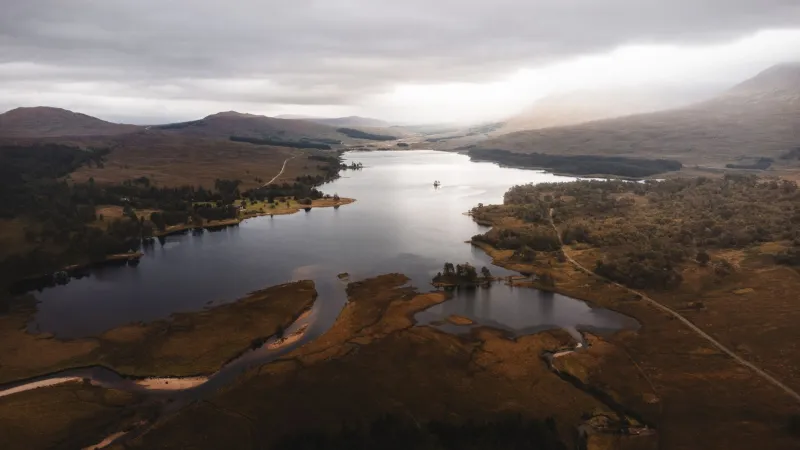
There's a moment on a November bank at Loch Achray when the pike hits, the rod hoops over, and every bit of planning you did on traces and lure choice goes out the window. What's left is the fish on the mat and whatever handling routine you've got in your head. In cold weather, that routine needs to be sharper than usual, not looser. Cold hands fumble. Frost makes mats slick. A fish that might have been in and out of the water in two minutes in June can end up out of the water for five while you hunt for forceps you swore were in your pocket.
The good news is that proper pike handling isn't complicated. It's just a sequence, rehearsed and repeatable, and it fits comfortably inside five minutes. Think of it as the other half of your rig planning — the half that happens after the bite.
Before the Cast: Set the Surgery Up First
Most winter pike anglers are organised about traces and lazy about the mat. Flip that around. Before the first cast, lay out a large unhooking mat with a decent lip, a wet weigh sling, long forceps, and a pair of side cutters or bolt croppers that will actually go through a treble. Keep them where you can reach them without standing up, because the worst place to discover your cutters are at the bottom of the rucksack is with a pike on the bank.
Wet your hands before you touch the fish. Dry hands and cold air strip the slime layer, and that slime is the fish's immune system. If you wear gloves, use rubberised ones rather than woolly ones that snag on hooks and hold water. A head torch on the bank in November is not a luxury; it's how you avoid rummaging around a pike's head in bad light.
The First Thirty Seconds: Keep It Wet
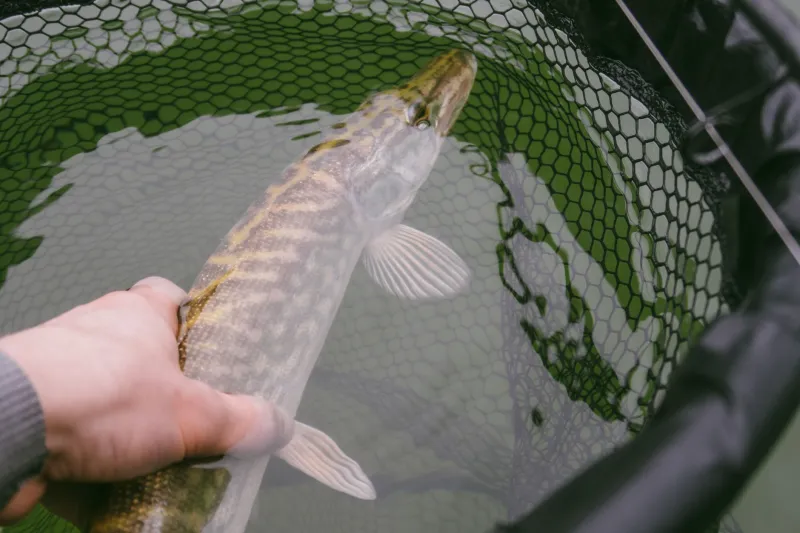
Where you can, unhook the fish in the water or in the net. A large soft-mesh net is fine for pike if you support the fish properly, and it keeps the fish calmer while you get your act together. Don't beach a pike on gravel or drag it up a steep bank. If you're on a boat, use the net and keep the fish in the water while you sort out forceps and cutters.
The clock starts when the fish leaves the water, not when you've finished taking photos. A pike out of the water for thirty seconds is fine. A pike out of the water for three minutes while you adjust your phone camera is not. Cold weather doesn't make that better; it just makes the fish slower to recover and your fingers slower to work.
Unhooking Without Guesswork
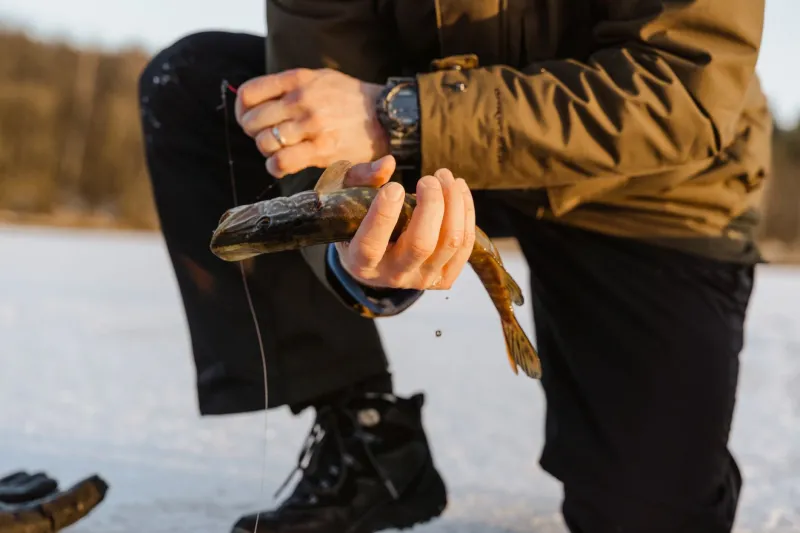
Pike unhooking is not a tug-of-war. If a treble is firmly in the jaw hinge or the scissors, use long forceps and back the hook out the way it went in. If it's deep, don't rummage. Cut the trace, leave the hook, and get the fish back in the water. A hook left in a pike is a far better outcome than a torn throat or a fish that's been mauled for two minutes.
This is where single hooks or semi-barbed setups earn their keep, but even with trebles the rule is the same: no pulling, no twisting, no guessing. If you can't see the hook clearly, get better light or get the fish back in the water and think again. Cold hands make you want to rush. Rushing is how hooks end up in fingers and fish end up damaged.
Lifting, Weighing and the Sling Rule
Never lift a pike vertically by the jaw. That's the one that still gets shared around, and it's still wrong. Support the fish horizontally, one hand under the belly and one around the wrist of the tail, and keep the fish low over the mat. If you're weighing, wet the sling first and zero the scales with the sling on. The fish goes in the sling, the sling goes on the hook, and the whole thing takes less time than finding your camera.
On the bank, kneel down rather than standing up with a fish in your hands. On a boat, keep the fish over the mat and not over the gunwale. A pike that flaps at the wrong moment can drop, and a drop onto a hard bank or a boat seat is exactly the kind of avoidable damage that gives catch-and-release a bad name.
Photograph Like You Mean It
Have your phone ready before the fish comes out of the water. Wipe the lens, unlock the screen, and decide where you're going to kneel. Two quick frames are plenty. Hold the fish low and horizontal, supported properly, and keep your fingers out of the gill plates. If you want the classic shot, take it with the fish just above the mat, not hoisted up at arm's length while you squint at the screen.
If the fish is lively, forget the photo. A quick release is always better than a mediocre picture. Nobody at the club will ask to see the evidence, and the pike certainly won't.
Revival: The Bit Everyone Rushes
Revival is not a formality. Hold the pike upright in the water, supporting it under the belly, and let it tell you when it's ready. Don't push it back and forth like a piston. Just keep it steady and upright, with its head facing into clean water, until it kicks and goes. In cold water this can take a bit longer than in summer, so give it the time. If the fish goes belly-up, keep supporting it. If it's still struggling after a few minutes, that's a sign something went wrong earlier in the routine.
From a boat, use the sling to move the fish to the water rather than carrying it across the boat. From the bank, lower it gently rather than dropping it. The release is part of the handling, not an afterthought.
The Five-Minute Clock
A simple routine looks like this. Minute one: fish landed, kept in the water or on a wet mat, forceps and cutters ready. Minute two: hooks out or trace cut, fish still wet and supported. Minute three: sling or photo, whichever you're doing, done quickly. Minutes four and five: revival in the water, properly supported, no rushing. If you're ahead of that clock, great. If you're behind it, cut the photos and get the fish back.
What Cold Weather Changes
Cold water slows a pike's metabolism, but it doesn't make handling damage disappear. Frost on the mat, cold hands, and short daylight all push you towards rushing. The answer is to rehearse the routine until it's boring. Know where your cutters are. Know how your sling clips. Know how to kneel on a wet bank without putting the fish down hard. The five-minute release is not about being slow; it's about being deliberate.
On Trossachs waters, whether it's a bank session on Venachar or a boat day on Katrine, the pike are the reason you're there. Treat the release with the same care you gave the trace. That's the bit that keeps the fishing ethical and keeps the fish there for next winter.