The Turn-Around Test: How Far Is Too Far on a Trossachs Winter Bank

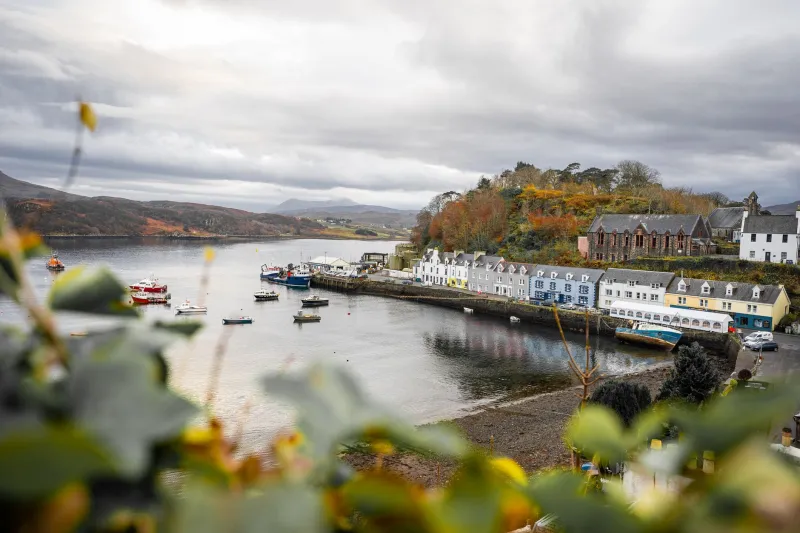
Photo: Peter Trimming from Croydon, England, CC BY 2.0, via Wikimedia Commons
There is a particular kind of optimism that takes hold in a Trossachs car park in December. The map shows a long, promising stretch of shore a mile and a half up the track, the sky is a flat, unconvincing grey that might just hold, and you think: aye, we'll walk it. Then you're back at the car at half three with numb feet, a headtorch you didn't strictly need but should have brought, and about ninety minutes of actual fishing behind you. The walking wasn't the problem. The walking was the day.
Forty Minutes, All In
My working rule is blunt: forty minutes of walking, total, out and back. Not forty each way. Forty in the pot. If a mark costs twenty minutes up the track and twenty back down it, that's a fair bet on a short day. If it costs thirty-five up and thirty-five back, the water had better be special in a way you can actually evidence — not in a way you're imagining from the driver's seat with the heater on.
On a Loch Venachar north-shore track or a wander up from Brig o' Turk, that rule rarely bites. Push it out towards the quieter ends of Loch Ard, or up past the hydro tracks near Stronachlachar, and it bites hard. The point isn't that distant banks are bad. The point is that on 13 November you've got roughly seven and a half usable hours, and by the time you've sorted parking, paid or checked your permit, geared up and had the inevitable faff, you're down to six. Hand forty minutes of that to a round trip and you've still got a session. Hand two hours to it and you've got a walk with a rod in your hand.
Scout the Access Before You Scout the Water
Most wasted walking isn't caused by bad fishing. It's caused by a gate you didn't know about, a track that's been closed for timber work, or a river crossing that looked like a dotted line on a screen and turns out to be a knee-deep spate.
So spend ten minutes the night before doing the boring bit. Look at the Forestry and Land Scotland access pages for the block you're heading into. Check whether the parking you're relying on is a proper car park or a passing place that will have a forestry van in it by nine. Read the Scottish Outdoor Access Code once properly if you've never done it — it's short, and it covers exactly the situations that get anglers shouted at, like crossing a field of cattle or squeezing past a house.
Then look at the route with a critical eye. Satellite imagery will show you where the forest tracks actually run, which is often nowhere near the tidy line on a road atlas. It'll also show you clear-fell, and a felled slope is a genuinely different walk from a mature plantation: ankle-deep brash, hidden stumps, and a gradient that turns twenty minutes into forty. If the shore you want sits beyond a felled block, budget double and see if you still fancy it.
Reading Ground You Can't See From the Road
Winter ground in the Trossachs lies to you. Grass that looks firm is a bog with a crust on it. A pale patch on a track is sheet ice over a rut, not a puddle reflecting the sky. Boardwalks and timber bridges hold frost long after the surrounding ground has softened, and a small slide on one of those is how a quiet morning becomes a hospital trip.
Three things I check before committing to a long walk-in:
- Water on the surface. Any track with standing water at the low points is going to have more of the same further up, and the return leg will be in worse light.
- The steep bits on the map. Contours don't care about your knees. A 150-metre climb on the way out costs twice as much on the way back with a rucksack and fading light.
- Fencing and gates. Deer fences with high stiles are fine at a stroll and miserable in waders. Estate gates that are chained are chained — plan the route around them rather than assuming you'll "just nip over".
Pack for the Walk, Not the Water
If you're walking more than fifteen minutes, you're not packing for a fishing session, you're packing for a hill day with fishing attached. Those are different rucksacks.
One rod — a two-piece that breaks down and straps to the side, not a three-rod quiver. One small box, not the tray system. Bait in a pouch rather than a bucket. Flask, spare gloves, a genuinely warm hat, a headtorch with fresh cells, and a small sit mat so you're not resting your backside in a bog for three hours. Add a waterproof trouser layer even if it's clear, because wet ground plus a cold wind is what actually ends sessions early.
The mistake I see most often is the ambitious bag: every lure, every rig, a spare net, a chair. By the time you've carried that lot a mile, you're too tired to fish it properly and too stubborn to admit it. Half the kit and twice the time on the water usually beats the reverse.
The Trigger for Turning Round
Set the timer before you leave the car and be honest with it. If you haven't reached fishable water by the end of your outbound allowance, stop at the first decent-looking spot you come to and fish it. Don't push on for the perfect bay. The imperfect bay with an hour of light left will out-fish the perfect one you reach at dusk.
And build in a margin. Whatever you think the walk back takes, add ten minutes. Cold legs, a heavy bag and a path you don't know in the half-light are a slow combination, and the last twenty minutes of a November day go fast.
When the Long Walk Earns Its Place
There are days when the far bank is worth everything. A hard overnight frost with no wind forecast, a full day in front of you, a bothy or a flask stop to break the trip, or a mate who's walked it before and can tell you exactly what the ground is like. Under those conditions, the forty-minute rule is guidance, not law — and the quiet water at the end of a long track can be genuinely excellent.
What it isn't worth is a rushed two-hour round trip shoehorned into four hours of grey light in the middle of winter, with a permit you bought for a loch you can barely see. Leave that one for February, or for the long days in June. The fish will still be there, and you'll fish them better when you're not watching the clock.