Pocket Water, Pocket Money: A Tenkara Case for Trossachs Hill Burns
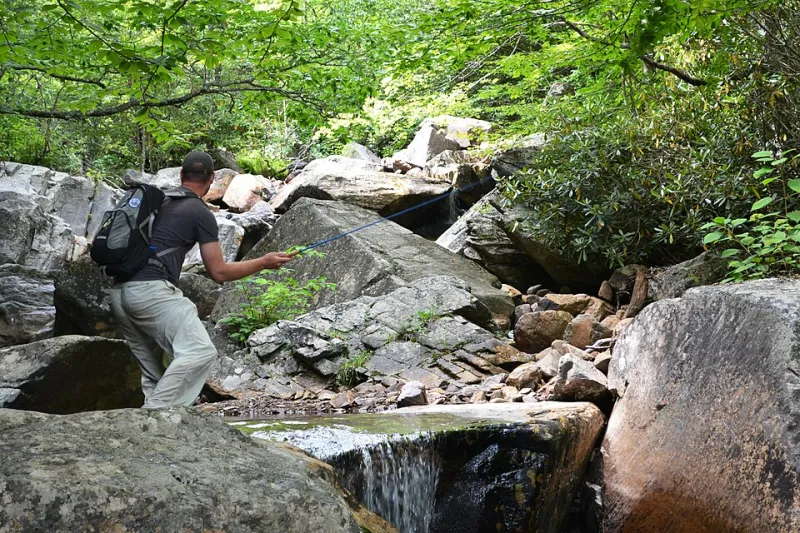
Photo: Virginia State Parks, CC BY 2.0, via Wikimedia Commons
Winter in the Trossachs has a habit of making plans for you. You drive up with a box of pike flies and a notion about Loch Achray, and by the time you reach the car park the wind is coming down the glen like a freight train. The loch is brown, the horizon is smudged, and you have maybe ninety minutes before the light goes. That is the moment a small burn starts to look attractive.
Tenkara will not turn a closed season into an open one. It will not magic fish out of a spate. What it does is strip the day back to a rod, a line, a tippet and a fly, so you can cover pocket water quickly and walk away when the cold gets into your boots. Done properly, it is the cheapest form of fly fishing I know—and one of the most intimate.
Why a burn suits a short winter session
Big water needs time. Small water does not. A burn is finite. You can read a 200-metre stretch, fish the good bits and be back at the car before your hands stop working. In winter, you are looking for slower seams, deeper pockets behind boulders, and the tails of pools where fish sit out of the flow. You are not looking for a hatch. You are looking for somewhere a trout—or, on the right permit, a grayling—can hold without burning energy.
The other advantage is shelter. A steep-sided burn can be out of the worst of the wind. That matters more than most tackle reviews admit. If you cannot cast, you cannot fish, and a tenkara rod in a gale is a liability. Pick a burn with banks and trees, and fish the bits that are actually fishable.
The kit: keep it boring
A 10ft 6in to 12ft tenkara rod covers most Trossachs burns. You do not need the most expensive rod. A mid-priced telescopic rod with a spare tip section is a sensible budget buy; check that spares are available before you pay. Add a level line in a bright colour—3.5 to 4.5 metres is plenty for tight water—and a spool of 3lb to 4lb tippet. For flies, a small box of kebari patterns in sizes 12 to 14 will do. Think peacock herl, CDC, a bit of partridge, a little weight under the thorax for the deeper pockets.
A small rubber-mesh net, forceps, and a line cutter finish the kit. A cheap thermometer is not a bad idea either. If the water is close to freezing, the fishing will be slow and the fish will be stressed. Tenkara is lightweight; your handling should be too.
Reading pocket water without overthinking it
Look for the obvious: boulders, ledges, undercut banks, the crease where fast water meets slow. In winter, the fish are not spread through the riffles. They are tucked into the soft spots—the plunge pool below a rock, the slack behind a boulder, the deeper run under a root. Fish upstream. Keep low. If you can see the fish before it sees you, you are doing it right.
Do not wade unless you have to. In a small burn, wading spooks fish and damages banks. Stay on the bank, use the rod to reach, and make short casts. The best tenkara anglers on small water are not the ones who cast furthest. They are the ones who cast least.
Presentation in tight cover
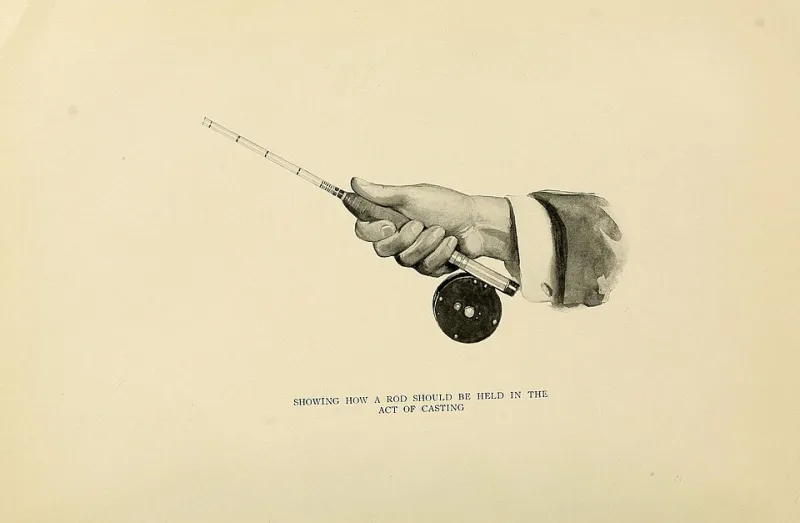
Short line, high rod, fly first. A bow-and-arrow cast gets you under branches and into gaps that a normal cast cannot reach. A dapped fly—just holding the rod out and letting the current work the fly—can be deadly in a deep pocket. For the rest, it is an upstream dead drift with just enough contact to feel a take.
Keep the line off the water where you can. In a burn, drag starts immediately. If the fly is not moving naturally, move your feet and change angle. Strike small; tenkara takes are often a stop or a twitch rather than a pull.
Permits, seasons and the redd problem
This is the bit that matters. In Scotland, freshwater fishing is not a free-for-all. You need permission for the water you are fishing, and a loch permit does not automatically cover every burn feeding it. Some burns are part of an estate or angling association; some are closed at certain times. The Scottish Outdoor Access Code gives you the right to walk, not to fish.
Check the season before you go. On many Trossachs burns the brown trout season closes in autumn. In November, most small burns are not open for trout. Tenkara is a tool for the open season—or for grayling where a permit specifically allows it—not a way around the close season. And if you see fish on gravel, leave them alone. Those are spawners, and no fish is worth that.
Where to try, without breaking rules
The safe answer is to start with a permit you can actually read. Local angling associations and estates publish their waters and seasons; some include small burns, many do not. Ask at a tackle shop in Callander or Stirling, or check the relevant association's website. If a burn is not listed, assume it is not included and ask. The Trossachs is not a theme park; the fishing rights are real and often private.
Once you have a permitted burn, pick a short stretch and fish it properly. A couple of hours is enough. Take a flask, take a headtorch, and leave when the cold starts to win. Tenkara is supposed to simplify the day. Do not complicate it again with a ten-mile walk and a closed season.