Five Knots Worth Learning by Feel, Not by Torchlight
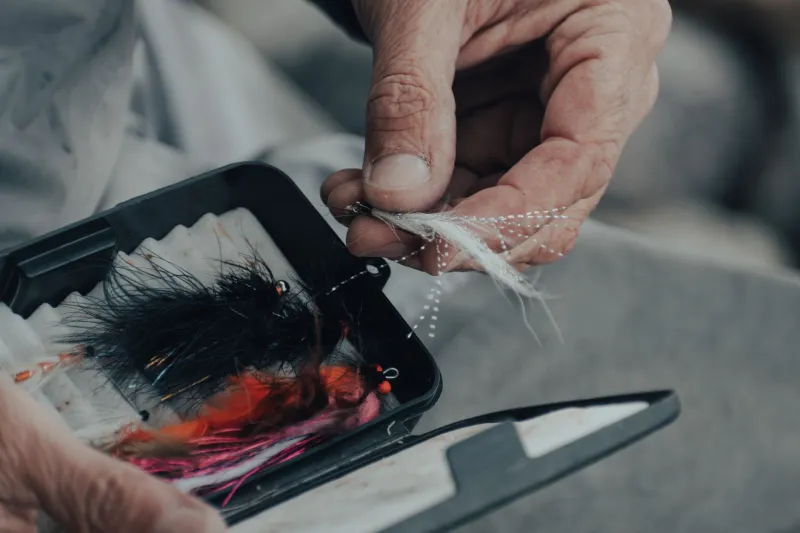
There is a particular kind of silence on a Trossachs bank in November. The loch is flat, the hills are doing their best impression of a wet sponge, and you are crouched over a lure with a phone torch in your teeth because the light has gone early again. That is not the moment to be trying a knot you saw once in a video. It is the moment for a knot your fingers already know.
The aim here is not to build a knot library. It is to build a small, dependable set that covers the jobs a bank angler actually meets: tying a lure to a trace, joining braid to fluorocarbon, attaching a hook or swivel, and giving a lure enough freedom to behave. Five knots will do most of it. Learn them at the kitchen table, then learn them with cold hands, and the bank becomes a calmer place.
The improved clinch: your everyday lure knot
Use it for: eyed hooks and lures tied to mono or fluorocarbon in the rough 6–12lb bracket. It is quick, compact and strong enough for perch, trout and smaller pike patterns where a trace is not in play.
Where it goes wrong: anglers rush the cinch. If the knot is not wetted, the friction can cook the line before it seats. If the tag end is too short, it can slip as you tighten. And if you tighten by hauling on the tag rather than the main line, the coils can bunch up instead of lying neatly.
Two-minute drill: cut a 30cm length of 10lb mono and tie it to an old hook. Wet it, tighten slowly, then check the coils. Do five with your eyes open, then five with your eyes shut. The point is not speed. It is knowing the feel of the knot seating properly before you look at it.
The Palomar: simple, strong, hard to argue with
Use it for: attaching lures, hooks and swivels when you want a no-nonsense knot that works in mono, fluorocarbon and braid. It is especially handy on a Trossachs bank when you are re-rigging a pike trace in a hurry and do not want to think too hard.
Where it goes wrong: the loop is often made too large, which lets the doubled line cross over itself. A lazy overhand knot can also fail to seat squarely. The Palomar wants a neat loop, a clean overhand and a steady pull on the main line while the tag end is controlled.
Two-minute drill: use a short length of braid and an old swivel. Tie five Palomars, checking that the knot sits tight against the eye. Then do three with cold tap water on your hands. If you can make the loop and seat it without the swivel escaping, you are in good shape.
The double uni: joining braid to fluorocarbon
Use it for: mainline braid to a fluorocarbon leader, which is a common setup for pike and perch work around Venachar, Lubnaig and Achray. It is not the daintiest knot in the world, but it is reliable and easy to inspect.
Where it goes wrong: uneven turns. Braid usually wants more wraps than fluorocarbon, often six to eight against four or five. Pulling the wrong ends, or failing to wet the knot before cinching, will leave you with a lumpy join that catches in the rings. Trim the tags close, but not so close that the knot can slip.
Two-minute drill: make three joins using 20lb braid and 15lb fluorocarbon. Keep the turns tidy and the two knots snug against each other. Then pull steadily, not sharply, to check the join. A good double uni looks neat and feels solid under the thumb.
The non-slip mono loop: letting a lure breathe
Use it for: hard lures and soft plastics that need a bit of swing. On a cold day, when perch are sitting deep and pike are sluggish, a lure with natural movement can make the difference between a follow and a take.
Where it goes wrong: the loop collapses because the tag end is too short or the wraps are not controlled. It can also fail if you tighten the wrong part and strangle the loop before it has formed. The knot should finish with a fixed loop at the eye, not a knot jammed tight against it.
Two-minute drill: use a 30cm length of 12lb fluorocarbon and an old lure with a large eye. Tie five loops, checking that the loop stays open after you pull the main line. Then try three with your eyes shut. The feel you want is the loop forming as the knot seats, not after it.
The uni knot: the bank-side spare
Use it for: attaching hooks and swivels when the eye is awkward, and as a general fallback in mono or braid. It is also the building block for the double uni, so learning it properly pays twice.
Where it goes wrong: the wraps stack on top of each other instead of lying side by side. That creates a bulky knot that can fail under load. Wet it before tightening, keep the turns neat, and slide the knot down to the eye with a steady pull.
Two-minute drill: tie five uni knots to a swivel using 10lb mono. Check that the wraps are parallel and the knot sits snug. Then do the same with braid, which needs more wraps and a little more care. If the knot looks like a coil spring, start again.
The cold-hands test
A knot you can tie in a warm kitchen is not yet a bank knot. Fill a basin with cold water, dip your hands, and tie your two most-used knots. Not in the dark, not in a gale, just with cold, slightly clumsy fingers. You will quickly find out which knot you actually know and which one you merely recognise.
Keep the practice kit small: a metre of 10lb mono, a metre of 20lb braid, a metre of 15lb fluorocarbon, an old hook, a swivel and a lure with a big eye. That is enough to keep the habit alive through the winter. Replace the line scraps when they get kinked or dirty.
Confidence over clutter
The best bank anglers are not the ones with the most knots in their heads. They are the ones who can re-rig without drama when the light is going, the wind is rising and the fish are showing just out of range. Five knots, practised until your fingers know them, will get you back to fishing faster than a phone full of diagrams. And on a Trossachs bank in November, that is usually the difference that matters.